A reading list
Here are the books I’ve chosen to spend my time with since I left my job last month, in the order I read them

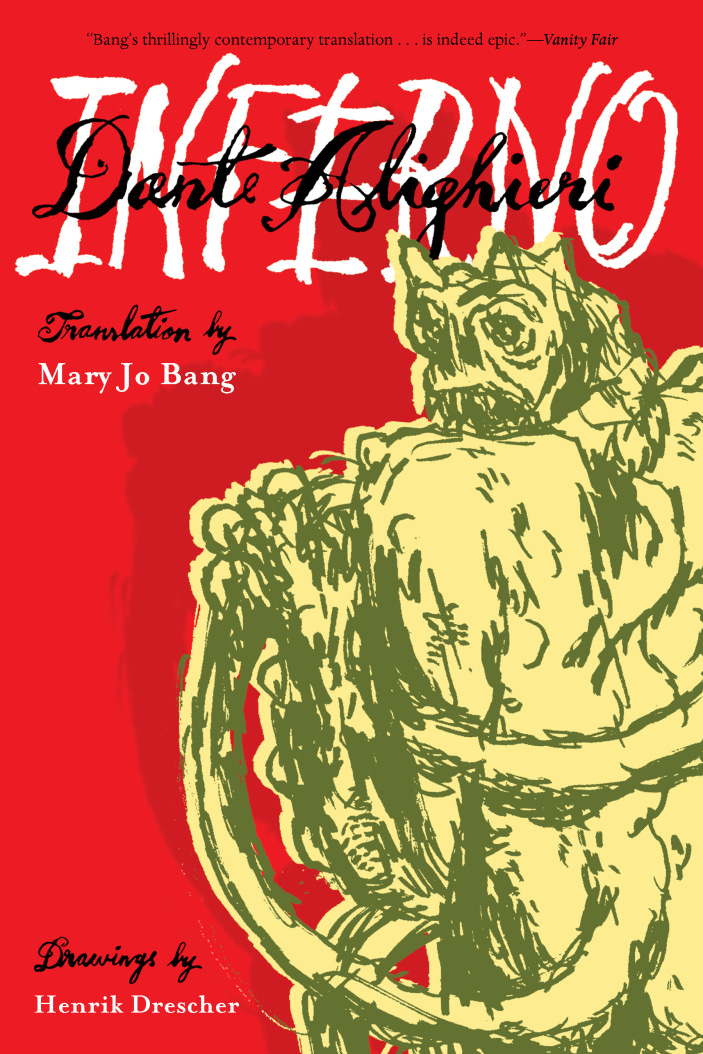
1. Dante’s Inferno, translated by Mary Jo Bang
You know the story: Heaven, but not yet. First, you have to come to your senses in a dark forest and realize you’ve strayed from the path. You have to lose hope, then find something bright that renews it.
That’s how Mary Jo Bang begins her introduction to this new translation of Dante’s Inferno. Those sentences are part of what convinced me to make this the first book I picked up when I was no longer handcuffed to a reading list for work.
Interviewing authors was always one of my favorite parts of hosting All Things Considered. But the privilege came with a catch. If a book had already been published, there was no chance I could read it. The list of forthcoming titles I had to finish for work was just too long. I interviewed Mary Jo Bang in July, when she completed her translation of Dante’s Divine Comedy. Ahead of that interview I read the third book in the trilogy, the newly-published Paradiso. But I didn’t have time to tackle the entire series.
And so, as I set off on a new chapter of my life, it felt appropriate to take this journey with Mary Jo Bang, Dante, and his guide Virgil. There was something symbolic about it, and I liked the idea of starting with poetry.
Save me, you say. And Virgil says, paradoxically the best way out is by going deeper in. … Somehow he convinces you and when he says “Let us go now,” it all seems feasible and, as if by a force outside you, you feel your feet move. You’re on your way to a place no one alive has ever seen outside imagination.
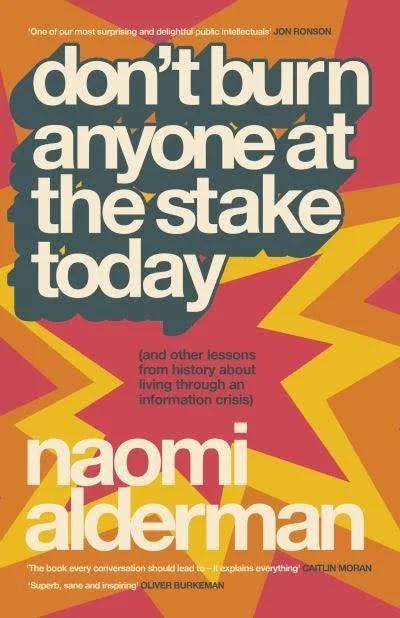
2. Don’t Burn Anyone at the Stake Today, by Naomi Alderman
This one is a little unfair, so I apologize that the second book I read after I left NPR is not yet available in the United States. It was recently published in the UK, and I got my hands on an early digital copy.
Naomi Alderman is best known for her work in fiction. Her novel Disobedience became a hit film on Netflix. The Power was a best-seller that was adapted to an Amazon series, and my conversation with Naomi about her novel The Future was among my favorite author interviews ever. She has also been successful as a game designer and a podcast host. I love the way her brain works.
This book is nonfiction. It’s slim, under 200 pages. The author looks at previous information crises in human history to explore what those eras can teach us about the moment we’re living through now. It has so many moments that made me look up and say “Oh my God.” For example - she makes a persuasive case that the invention of the printed word led humans to devalue our elders. Once you can write down a record of what happened, you no longer need to rely on 85-year-olds to tell you.
Another example: she describes a short story by Jorge Luis Borges called “The Book of Sand.” It’s about a book that has no beginning or end, with an infinite number of pages. The narrator becomes obsessed with the book. But soon, the object that he thought was a treasure become a nightmare. The reveal? We now all carry books of sand in our pockets. And this Borges story was published in 1975!
I don’t know whether Don’t Burn Anyone at the Stake Today has a US publication date, but keep an eye out for it.
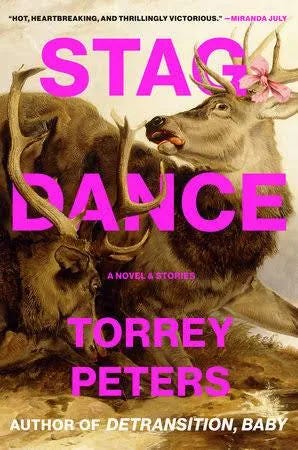
3. Stag Dance, by Torrey Peters
I loved Torrey Peters’s debut novel, Detransition, Baby. When this new book came out back in March, my friend Sam Sanders interviewed her about it on his podcast. I told him I was jealous, and he said - “The book is incredible, you have to read it!” But the publication date had already passed. I had missed the moment to add it to my reading list for work, and the stack of books I had to get through for upcoming interviews was already too long.
It was worth the wait. Stag Dance consists of a few pieces of short fiction, all exploring questions of gender identity in different genres and settings. The title novella, set in a logging camp, reminded me of the great Annie Proulx epic, Barkskins. (I interviewed Proulx about that 700-page book back in 2016…and yes, I read the whole thing.)
Stag Dance introduced me to a mythical beast called the agropelter. As I spent the last two weeks deep in a forest, I kept looking into the shadows to see if I could spot one among the redwoods.
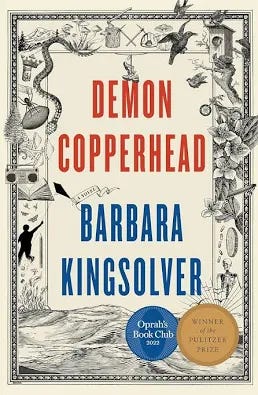
4. Demon Copperhead, by Barbara Kingsolver
More than the Emmys, Grammys, Oscars, or Tonys, I find that book awards actually do provide a pretty good road map of where I ought to direct my attention. Some of my favorite novels were Booker Prize winners. Demon Copperhead won the Pulitzer Prize for Fiction in 2023.
Barbara Kingsolver’s adaptation of Charles Dickens’s David Copperfield is my favorite kind of book to read - a sweeping epic novel that immerses you in a world of unforgettable characters. It’s not just that each line is gorgeous prose (“moon-dead dark!”). Like all of the best fiction, this book also helps me see the world in a new light. Take this section, where the teenage narrator, Demon, describes addiction. I don’t think I’ve ever seen it described as beautifully, nor (I would imagine) as accurately:
I was born to wish for more than I can have. No little fishing hole for Demon, he wants the whole ocean. And on from there, as regards the man-overboard. I came late to getting my brain around the problem of me, and still yet might not have. The telling of this tale is supposed to make it come clear. It’s a disease, a lot of people tell you that now, be they the crushed souls under repair at NA meetings or the doctors in buttoned-up sweaters. Fair enough. But where did it come from, this wanting disease? From how I got born, or the ones that made me, or the crowd I ran with later? Everybody warns about bad influences, but it’s these things already inside you that are going to take you down. The restlessness in your gut, like tomcats gone stupid with their blood feuds, prowling around in the moon-dead dark. The hopeless wishes that won’t quit stalking you: some perfect words you think you could say to somebody to make them see you, and love you, and stay. Or could say to your mirror, same reason.
Some people never want like that, no reaching for the bottle, the needle, the dangerous pretty face, all the wrong stars. What words can I write here for those eyes to see and believe? For the lucky, it’s simple. Like the song says, this little light of mine. Don’t let Satan blow it out. Look farther down the pipe, see what’s coming. Ignore the damn tomcats. Quit the dope.
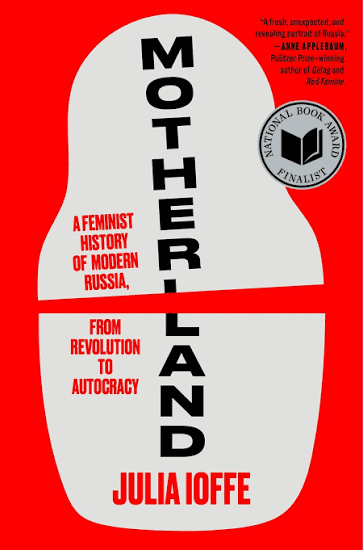
5. Motherland, by Julia Ioffe
I’m still in the middle of this one, and I’m hooked. I don’t generally seek out books about history, but Motherland reads like fiction. Julia Ioffe is a friend and a brilliant journalist for Puck. She was born in Russia and moved to the US as a child. This work combines her family’s personal story with the history of her birth country, told through its women, covering more than a century.
As she describes in the opening pages, Julia’s sister is the fourth generation of women in her family to practice medicine. Two of her great-grandmothers were doctors. “Another was a PhD in chemistry who, in the 1930s, ran her own lab and published scientific papers at a time when her peers in the West still needed their husbands’ permission to do much of anything.”
In this context, her descriptions of the idealism and the drive towards equality a century ago make the reality of today’s Russia feel so much more tragic. The book is one of five nonfiction finalists for the National Book Awards. The ceremony live streams tonight at 8. My fingers are crossed for Motherland to win, but I look forward to finishing the book no matter how the night turns out.
What have you loved reading lately? Tell me in the comments. I have a “want to read” list in the notes app on my phone (my book of sand), and I’m excited to add more titles to it.
I loved The Heaven and Earth Grocery Store for James McBride’s skillful depiction of a large cast of enjoyable characters in a small multicultural town. I’ve also enjoyed Manuel Betancourt’s The Male Gazed for the genre bending blend of memoir and cultural criticism. For something laugh out loud funny and smart, Andrew Sean Greer’s Less and Less is Lost are winners.
I just caught up on your last 4 or 5 newsletters and Demon Copperhead was one of my top books this year also. My other favorites were House of the Spirits, Pachinko, Culpability. I read and loved Emperor of Gladness after hearing your interview but my god it was depressing to me. Going to add some of these to my Libby requests!