How to fix capitalism
A guide to building a company that defies gravity

Here are words I never thought I’d write: The Norwegian Consumer Council went viral a few weeks ago. They produced this satirical video that clearly struck a nerve, about “enshittification.”
The author and commentator Cory Doctorow coined the term “enshittification” in 2022 and then wrote a book expanding on the idea. Doctorow’s work focuses on the internet. He explores why online platforms like Facebook, X, and Pinterest have become less fun and useful. But if you pull back the camera a little bit, there’s a bigger question that extends beyond the internet:
Why do good companies go bad, and how do great companies stay great?
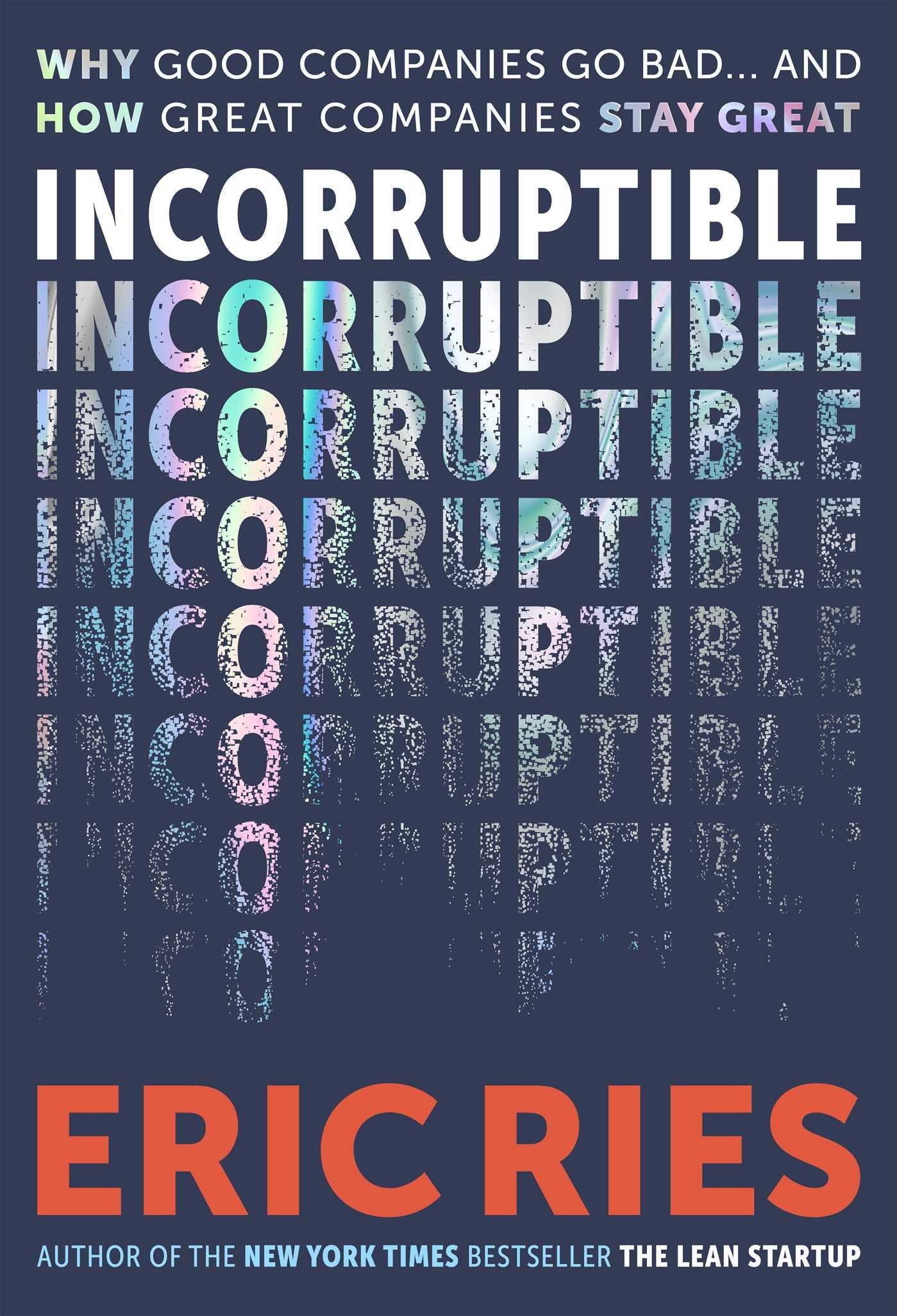
I stole that line from the subtitle of a book that’s coming out in May, called Incorruptible. I got an advance copy, and reading it made me so hopeful and excited that I’ve been telling everyone I know about it. This is not just a book for MBAs or people who work in business. It’s for anyone who has wondered, as I asked in an earlier post, “Is capitalism fixable?”
Disclosure: the author, Eric Ries, is a college friend, but we haven’t stayed in close contact over the years. His book publicist reached out to see if I’d be open to getting an advance copy. I said yes, with lots of caveats that I might not read it for months and I no longer host a radio show where I do author interviews. Then the book grabbed me so hard that here I am writing a substack post about it.
I have a general complaint about books or articles that identify a problem and promise to offer solutions. The diagnosis and explanation of the problem generally take up 90% of the writing, and then the solutions are weak tea. Whether the focus of the book is immigration, climate change, or politics, the “how to fix it” part typically smells like an editor ordered the author to tack something on at the end so the reader doesn’t leave feeling hopeless.
Incorruptible is the opposite of that. Eric offers fascinating case studies about companies that strayed from their mission: Boeing, Whole Foods, Polaroid, and more. He diagnoses exactly why and how they went wrong. And then he shows how other companies have defied gravity: Costco, Patagonia, Devoted Healthcare, Duolingo…it’s a long list, with examples from wildly different sectors of the economy.
Here’s one reason I find the book so exciting: Eric shows why these companies are not merely good corporate citizens, doing right by their employees and their customers. He argues that these companies actually outperform their competitors. In other words, you don’t have to be a morally upstanding businessperson to see the value in the principles he lays out. Anybody who wants to make money should find these ideas intriguing.

Coincidentally, I began reading the book on my way home from an interview with two founders of just such a company. David Heath and Randy Goldberg created Bombas 13 years ago. They built the company on a promise to make better socks and to donate a pair for every pair they sell. Bombas has now donated more than 200 million pairs of socks (along with shirts, underwear, and other products the company makes), and their socks are regularly ranked #1 by product review websites. It has also paid off. Bombas is the most successful company ever to have appeared on Shark Tank, with an estimated value of more than $3.4 billion.
I interviewed Dave and Randy in Boston for The WBUR Breakfast Club, a monthly conversation with business leaders. They told me that the idea for the company came to them when they learned that socks are the most requested item at homeless shelters. I said that sounds like inspiration for a nonprofit, not a company worth billions of dollars. In the video of our interview below, you can see how they responded.
Until now, I thought one of the most intriguing alternatives to the status quo came from author and botanist Robin Wall Kimmerer. In her book The Serviceberry, she argues that humans should pivot from economies of extraction to mutually reinforcing systems of abundance and reciprocity. I like that idea, and I found our interview a couple years ago inspiring. But worthy as it seemed, the goal of “putting the brakes on consumption” felt distant and slightly unrealistic. With Incorruptible, the call is coming from inside the house. The book doesn’t encourage a pivot away from profit-making. Quite the contrary - it argues that if you want your business to do well, founders and executives should focus on doing good.
Extra! Extra! Extra!
Passover starts next Wednesday night! This is traditionally the time of year when Jews throw out the half-empty jar of horseradish that has been sitting in their refrigerator since the previous Passover.
We always host a Seder, and this year a couple dozen people are coming to our house. I do the cooking. And while I don’t make the same menu every year, one dish that always shows up at the table is caramel matzoh crunch.
According to Epicurious, Marcy Goldman developed the recipe in 1985. You can find her version here. I tend to make one batch that is just dark chocolate and another with a bunch of different toppings: flaky sea salt, cacao nibs, nuts, dried cherries, or whatever inspires me.
This is a very easy recipe, whether or not you consider yourself a baker. I usually make a lot more than I need to, and then I leave it in the freezer. I would say it lasts all year, but let’s be honest - no matter how much I make, it is gone within a week or two.
Thanks for reading, and chag sameach to those who are celebrating!

I’m convinced to pick up a copy
Big fan of Eric Reis (Lean Startups) but it's impossible to change who we are at our very core. The single root driver of human behavior is survival of the self at the (relative) cost of others (physical, social, and egoic)