I was wrong about Mardi Gras
A conversation with parade dad Leo Herrera


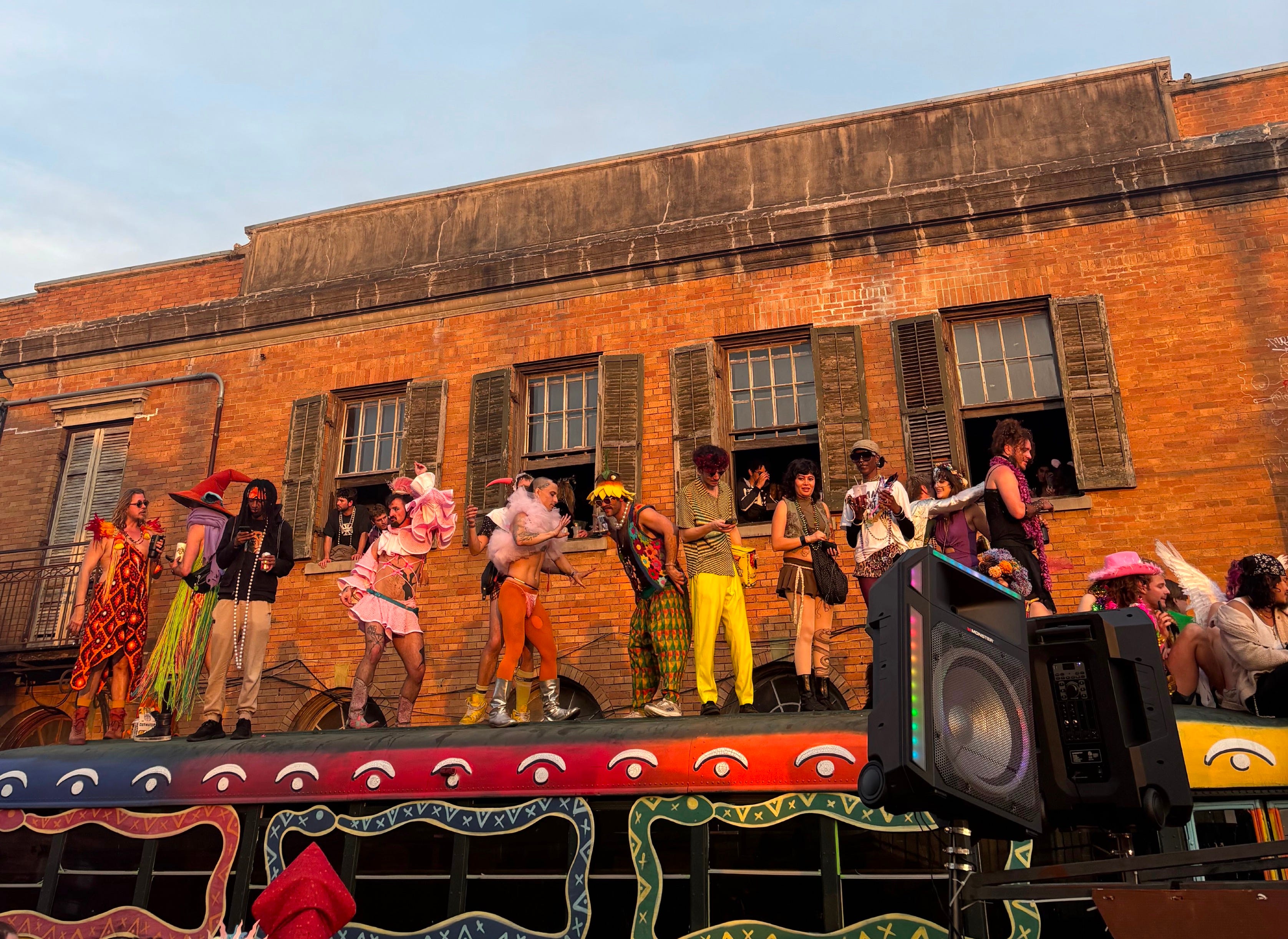
Friends in New Orleans urged me for years to come down for Mardi Gras. One reason I always declined was that I had a limited number of vacation days to ration. But beyond that, I never really thought it was my scene. I had visions of plastic detritus flying at screaming tourists, headache-inducing slushee drinks, and crowds dense enough to give anyone a panic attack. This year, I finally went for the first time. And what I found was an exuberant font of creativity and DIY artistry, as if Burning Man had taken over an entire US city.
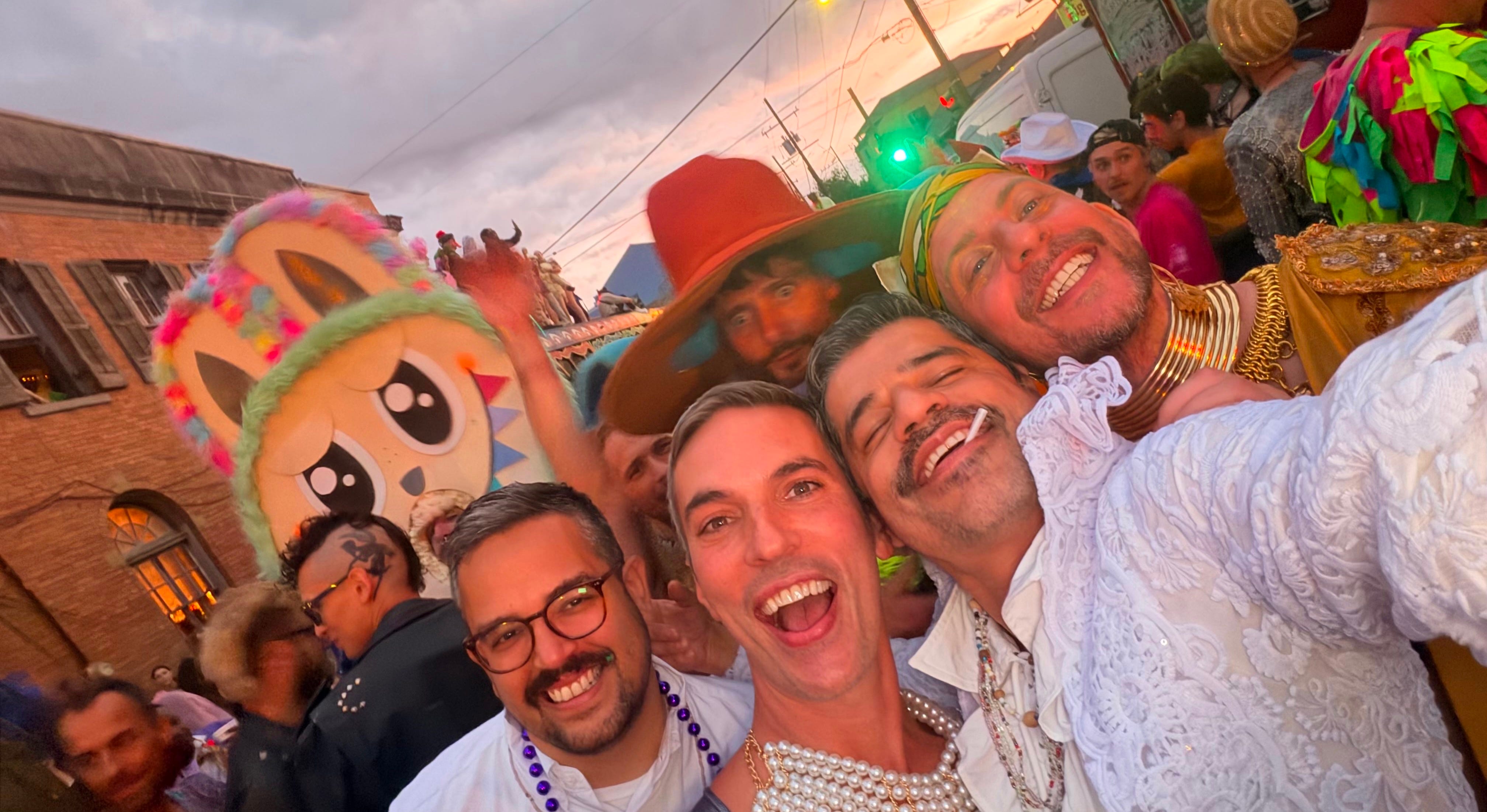
During my five days in New Orleans, I attended an extreme drag wrestling show called Choke Hole. I danced to a demonic ABBA cover band called BAAB at the Dads Ball. I attended a dawn processional called Eos, where people walked along the river with torches and towering puppets, sang the sun up, and ate pomegranate seeds. And while I was watching the red beans parade, Shia Laboeuf apologetically spilled a drink on me and a friend. (The next day, I saw headlines that he was arrested in a bar fight.)
I also ran into dozens of old friends who I didn’t expect to see. One of them, the performer Chris Giarmo, fed me homemade pistachio, cardamom, and papaya king cake in the middle of a block party. (…or was it persimmon? The fact checkers had the holiday off.) Chris later posted on social media that Mardi Gras is about “being your prettiest in an ugly, ugly world.” He added in an instagram story, “The action of the carnival is to turn society on its head and shake out all the bad vibes so we can once again stand up and move forward lighter, uplifted and together.”
Mardi Gras is so many things happening simultaneously across the city that it’s impossible to experience more than a small sliver of it. Without guidance, I could imagine being adrift in the chaos. So I was grateful to have two New Orleans ambassadors who steered me in the right directions. One, Mitchell Kulkin, designed and decorated the house where I was lucky enough to stay with him. The other, Leo Herrera, lives in the French Quarter and takes pride in his role as Parade Dad. On Tuesday afternoon, he served up a buffet in his courtyard where people could pause and catch their breath amid the chaos.
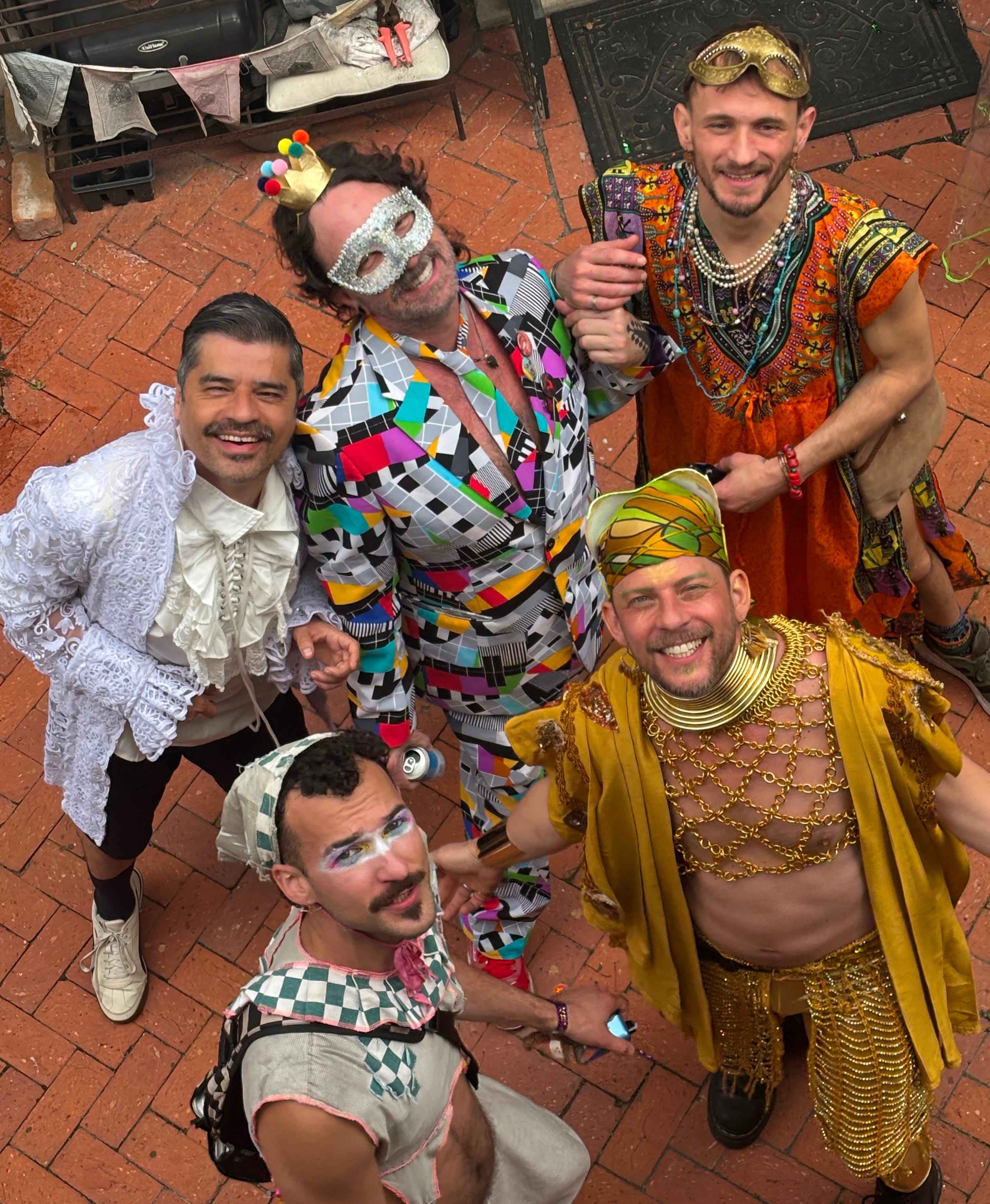
I always appreciate the cultural and sociological insights that Leo shares in his newsletter, Herrera Words, so I asked if he would chat with me about what Mardi Gras represents to him. Here’s a lightly edited transcript of our conversation:
Ari: Why do you encourage people to come to New Orleans for Mardi Gras? What do you want them to experience?
Leo: There’s that Mark Twain quote that people have been posting, about how you haven’t experienced the United States until you’ve seen Mardi Gras. And I do believe that it is the best of what this country has to offer, especially right now. It is such a piece of living history, and there’s so many different versions of Mardi Gras for everybody. I think you can reveal things to yourself through celebration that you wouldn’t find anywhere else.
Ari: You mentioned so many different versions, and that was one thing that I didn’t fully appreciate until I got there. The rich white Republicans uptown are celebrating Mardi Gras in one way. The folks in the lower ninth ward are celebrating Mardi Gras in another way. It takes over the whole city, which encompasses wildly different groups of people.
Leo: Yeah, and it’s really difficult to feel the scope of it if you haven’t experienced it firsthand, because there really is no way to document the whole thing. And so a lot of people have misconceptions - like sometimes a tourist will just wait around on Bourbon Street because they think that the parades go by there. It is a weeks long celebration, and there are so many components of it. There are old traditions that are attached to it and new ones. So it really is, to put it in a sort of corny way, a melting pot.
Ari: Is there one tradition that every year for you, it’s not Mardi Gras unless you do that thing?
Leo: The king cake is a really big one for me, because it carries so much significance to be able to have king cake through only this one season. Everybody creates their own version, and then it has a hard stop. On Ash Wednesday you’re not allowed to have king cake anymore. Food is such an entry point, especially here. And that was one of the traditions that survived through our COVID Mardi Gras. We couldn’t really gather, but we could still have king cake.
Ari: Tell me about hosting in the French Quarter, which is such a chaotic hub on the day of Mardi Gras. What do you get out of having people to your courtyard that afternoon?
Leo: There used to be a lot more permanent residents in the Quarter, and so the people that are still here feel a sort of social responsibility to share your space and to open up your home. And that’s a very traditional southern thing. I was talking to a gallery owner down the street a few weeks before, and we were talking about how, when you have a place in the Quarter, which is such a special neighborhood that is 300 years old and everybody wants to see it, you have a level of responsibility to share. You’re also a steward of the neighborhood, so it’s really important to keep some of those traditions alive - to allow people, at least on that day, to experience what it’s like to live here, to see the courtyards, and to be in these really old buildings.
Outside of my front door is all of the chaos right there. So it is really wonderful to be able to welcome friends in to use the bathroom, to get some food. By the time they get here, they’ve been drunk for four or five hours already. Even the way that my house is decorated, it’s toddler proof. If you’re a toddler or if you’re a 40 year old drunk queer man, there’s not much that can be messed up in my house. It’s designed that way.
It brings me so much joy, because when I first came to Mardi Gras, being welcomed into people’s homes in the Quarter, in the Bywater, Uptown, that added so much to my experience. It does sort of create this almost psychedelic quality when you’re just walking around this old neighborhood and somebody says, “Oh come on in, have some food, use the bathroom.” It really means a lot for people.
Ari: Is there one image or memory from this year’s celebration that you’re going to carry with you through the rest of the year?
Leo: A lot of the locals expressed to me that we had a hard time getting into the Mardi Gras spirit, because it felt almost wrong to celebrate right now with everything that’s going on in the country, with the level of stress and anxiety and really what is essentially just a big ball of grief that a lot of us are carrying. We felt almost a level of guilt because the rest of the country doesn’t have something like this to release it.
But the moment that I left the courtyard, to be able to go into Mardi Gras, and everybody had gotten fed, and everybody had their moment here, and nobody broke anything, and everything worked out just fine - The moment I closed the door, and I got to walk into the quarter, and everything was just vibrating outside. I realized that I got to have my Mardi Gras now, I was flooded with a level of gratitude and a feeling of comfort and safety that I haven’t been feeling very much in a couple of months.
Extra! Extra! Extra!
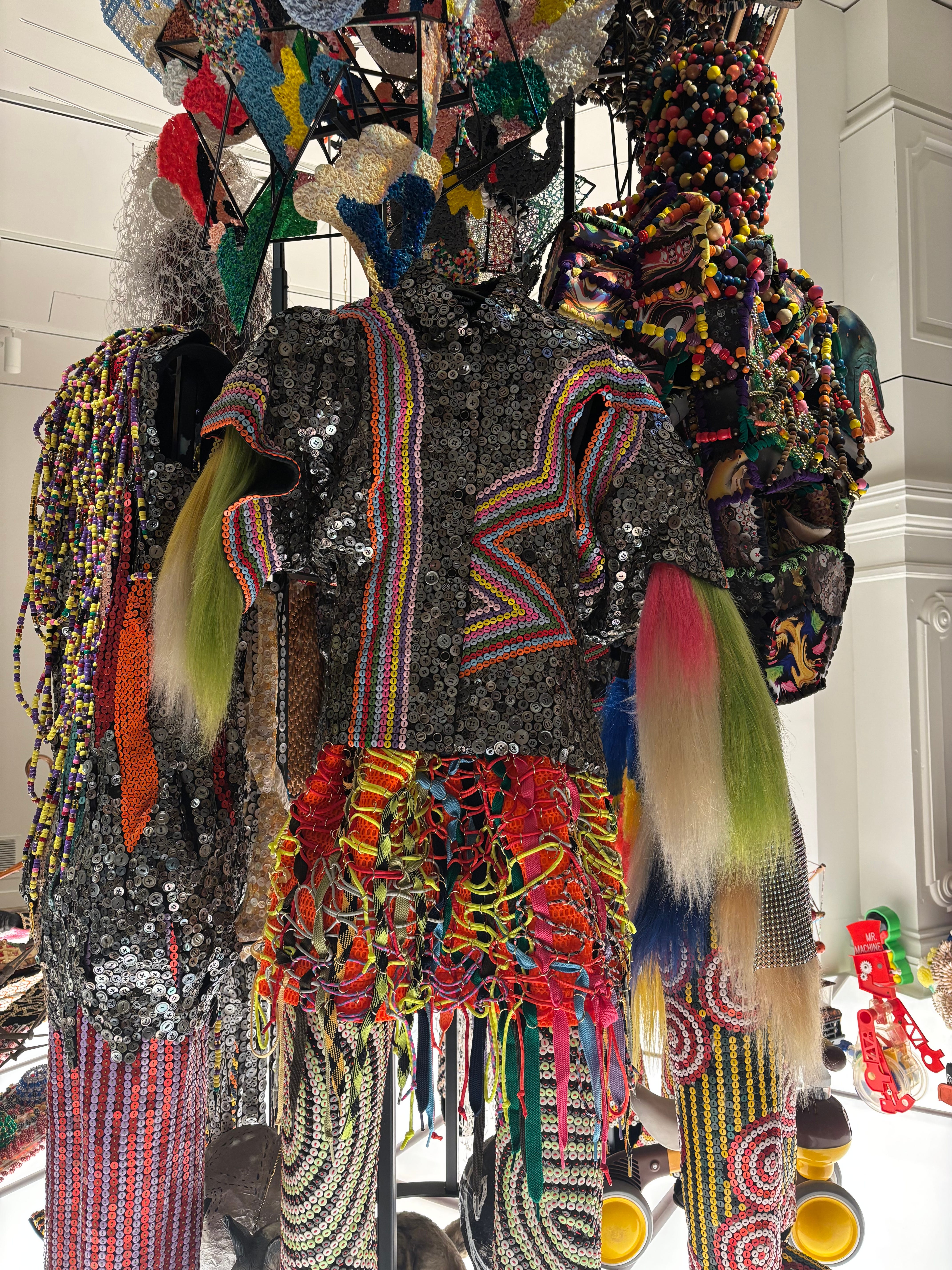
The night before I flew to New Orleans, I went to the opening of a new show at the Smithsonian American Art Museum. “Nick Cave: Mammoth” is the museum’s largest ever commission by a single artist. It has been almost a decade in the making. It also felt like a very appropriate prelude to Mardi Gras.
If you’re going to be in DC any time in the next year or so, I recommend a visit. If you aren’t, this New York Times piece will give you a sense of what you’re missing, and this CNN video lets you see some of what it took to create the show.
Thanks as always for reading! If you’re at On Air Fest in Brooklyn next week, stop by and say hi.
 | A guest post by
|
I had the pleasure of going to Mardi Gras in 2001, 2002 & 2003 with Gabriel Q and we got to walk as giant butterflies in the Orpheus parade. I think he does Muses now and has done for years. It was incredible to walk the parade route (and once in the rain) and see all the different neighborhoods, get cheered on, be called "f***ots” by some high school kids, get confused looks from the tourists, and see the whole show. And to your point about grief - on Tuesday we would get up and walk with St. Anne’s Crewe to the river with a jazz band, and people would throw things in the river to let go of people they’d lost that year. The heaviness was always offset, but even in the midst of a big party there was always a moment for loss. Beautiful. We stayed at a house in the Bywater, and went to house parties and it just showed what an incredible community celebration it is. Also, video cameras arrived between the first and second year, which did change the tenor a bit when things could be recorded. No one had camera phones or video cameras. That first year I saw fellatio on top of the roof of a bar to a big finish with applause and cheers from the crowd. What a place.