Is Capitalism Fixable?
A conversation with Patagonia CEO Ryan Gellert


A few years ago, Patagonia founder Yvon Chouinard made a move that I’ve never heard of a corporate leader doing. He transferred ownership of his company to a charitable foundation dedicated to fighting the environmental crisis and defending nature. In a statement at the time, Chouinard said, “Instead of extracting value from nature and transforming it into wealth for investors, we’ll use the wealth Patagonia creates to protect the source of all wealth.”
This move may have been unprecedented, but it was consistent with the way Chouinard has done business since he founded Patagonia as a climbing gear company in 1973. If you look up the company’s core values, you find this line: “Every decision we make is in the context of the environmental crisis challenging humanity.”
The company says its annual sales total nearly $1.5 billion, and the nonprofit that owns it has given $180 million to conservation and climate change programs since Chouinard transferred ownership in late 2022. I am a skeptical journalist who has seen a lot of corporate greenwashing, but this looks different. So how does a company like Patagonia balance the need to make and sell things with a mission to help the planet? If this business really is a unicorn, can other companies learn anything from Patagonia’s approach? More fundamentally, is capitalism fixable?
A couple weeks ago, I had the chance to ask Patagonia CEO Ryan Gellert those questions in front of an audience of Boston business and civic leaders. I was honored to help public radio station WBUR launch a new monthly live event series, “The WBUR Breakfast Club.”
In addition to the state of business, Gellert and I talked about how corporate America is responding to politics right now. I was surprised that he was not afraid to name business leaders who he thinks are failing to meet the moment. You can watch our 45-minute conversation in its entirety to see for yourself. The whole interview left me feeling hopeful and inspired. I hope it does the same for you:
Extra! Extra! Extra!
Good news for people holding their breath for spring: This week we passed the halfway point between the winter solstice (the shortest day of the year) and the spring equinox (when day and night are of equal length). In Gaelic and Pagan traditions, the day is called Imbolc. It is connected to the goddess Brigid, who was later brought into the Christian fold as St. Brigid.
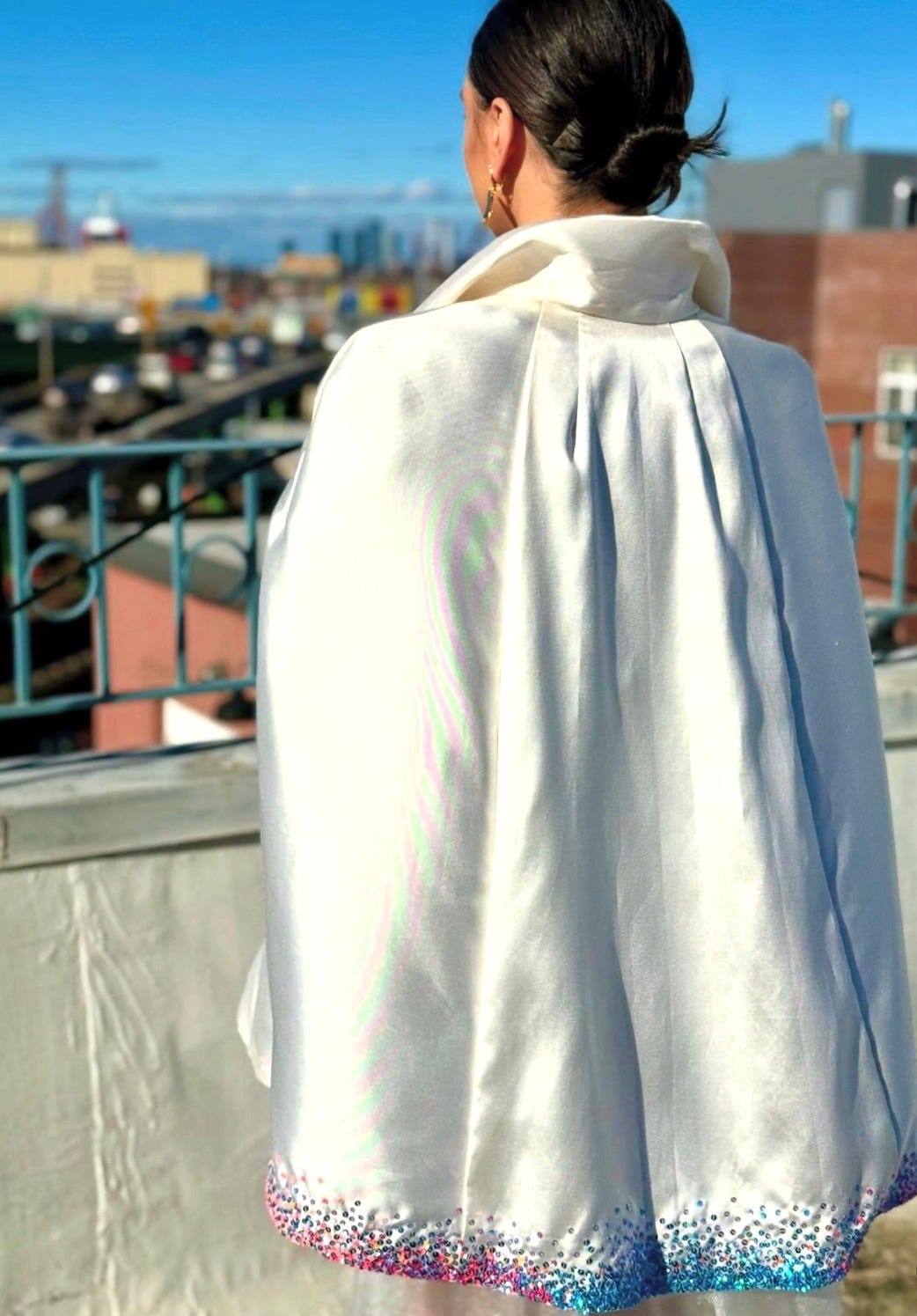
The holiday has associations with fertility and rebirth. It is, among other things, about the sun beginning to return to the landscape. Last year my friend Lulu Krause (whose Substack posts always inspire me) created a “sunlight cape” inspired by Brigid. You can see images of the cape and some of the process behind it here.
I like the idea that the name of the holiday Imbolc refers to ewes becoming pregnant. As I trudge through piles of unplowed snow in Washington DC every day, it is obvious that we are not yet at the stage of lambs frolicking among pastel-colored flowers. But pregnancy is a good metaphor - deep inside, something is starting to grow; days are getting longer; and warmth is on the horizon.
In November we lost community leader Gavin McComas,owner of Sundance Natural Food in Eugene, Or.
He transitioned ownership over to a stewardship trust (none of us own anything) that the employees carry on.
Thanks to the foresight these people have.
Needed more than ever.
If only more corporate leaders would take a cue from Patagonia's model. More and more, I believe that capitalism is indeed the root of most of, if not all, the current problems in the United States.